How Long Does a Sprayed Kitchen Finish Actually Last? (Real Data, 2026)
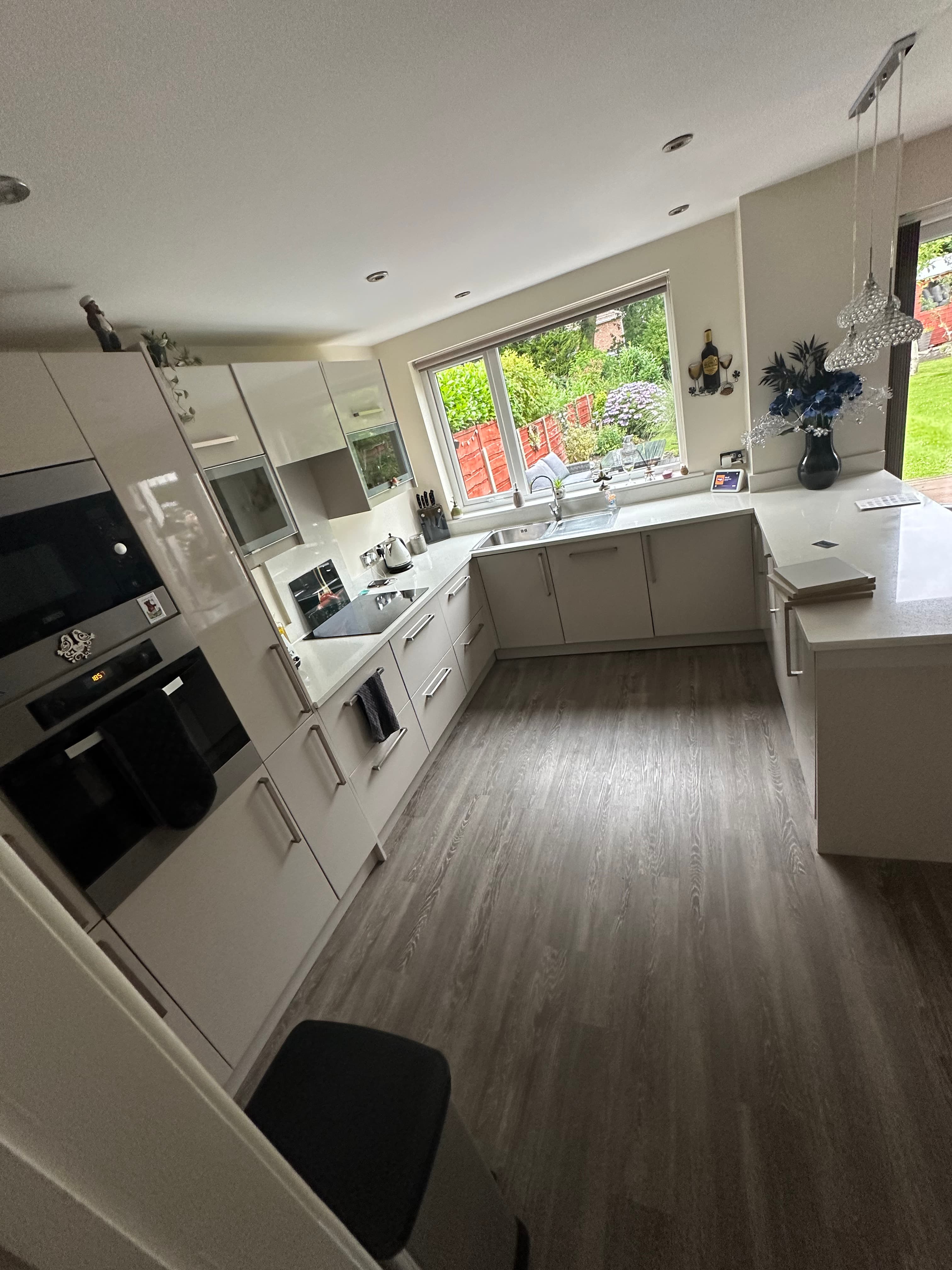
The honest answer takes more than one number. A kitchen we sprayed in 2014 is still going. A kitchen sprayed by a competitor in 2022 was a peeling disaster within 14 months. The difference wasn't luck — it was paint chemistry, surface prep, and what happens during the first week of curing. So if you're considering a respray and want to know whether your money is going to outlast the trend cycle, here's the proper answer.
We track every kitchen we've completed since 2007. Returning customers, recalls, warranty work, photos sent in by happy customers years later. From roughly 2,400 kitchens, we have a decent sample of what actually happens to a sprayed finish over time. Some of it surprised us.
The real lifespan numbers
Pulled from our records, here's what actually happens to sprayed kitchens over time:
| Years since respray | Standard Respray (2K paint, in-situ) | Premium Respray (workshop, full strip) |
|---|---|---|
| Year 1 | Indistinguishable from new | Indistinguishable from new |
| Year 3 | 99% perfect; possible minor mark at heaviest-use handle | 100% perfect |
| Year 5 | 95% perfect; some sheen reduction near hob possible | 99% perfect |
| Year 7 | Visible signs of wear at handle areas and near hob; full integrity | 97% perfect; minor sheen variation possible |
| Year 10 | Refresh recommended — overall finish tired | 92% perfect — visible signs of wear at heavy-use points but still intact |
| Year 12 | — | Refresh recommended |
| Year 15 | — | Failure points likely (handle holes, near hob, sink area) |
These numbers assume a properly applied finish using 2K (two-pack) industrial polyurethane paint. The lifespan of cheap respraying — single-pack eggshell wall paint applied without proper prep — is dramatically shorter. We see those failing visibly within 12–18 months.
What surprised us most when we ran the numbers: the difference between Standard and Premium isn't just visual at year 1 — it's where the finish is at year 7. Premium kitchens sprayed in 2017 still look 95%+ perfect today. Standard kitchens from the same era are mostly still sound but visibly aged. Both are still doing their job. Both are still cheaper than replacement.
What 2K paint actually is (and why it matters)
If you take only one technical fact from this guide, take this one: the type of paint used is the single biggest determinant of how long your respray lasts. The difference is enormous and most homeowners have no idea it exists.
2K (two-pack / two-component) paint is industrial-grade polyurethane. It comes in two parts — a base and a hardener — that get mixed immediately before spraying. The chemical reaction between them creates a finish that cures by cross-linking, not just by evaporating water. Once cured, the surface is genuinely tough — comparable to factory-finished kitchen doors. The same chemistry is used on car bodywork, aircraft interiors, and yacht fittings.
- Drying time to handle: 4–8 hours
- Full cure (maximum hardness): 7 days
- Lifespan on a kitchen door: 10+ years
- Cost per litre at trade: £80–£200
- Yellowing over time: Negligible with modern UV-resistant formulations
1K (one-pack) paint is what most cheap resprays use. This includes household eggshell, satinwood, and budget acrylic. It dries by water or solvent evaporation only — no chemical cure.
- Drying time: 2–4 hours (touch dry; never fully hardens)
- Full hardness: Never reaches comparable hardness to 2K
- Lifespan on a kitchen door: 12–24 months before visible wear
- Cost per litre: £25–£60
- Yellowing: Common, especially in whites and pale colours
The cost difference per litre might seem academic — a few extra quid on materials — but a kitchen takes 2–4 litres of paint. The £200–£500 saved using 1K paint costs you a respray repeat 3–5 years sooner. Bad maths.
When you're getting quotes, ask: “What paint are you using?” If the answer is anything other than “two-pack” or “2K” or a specific brand like Tikkurila Helmi 30, Renner Italia, or similar — be cautious. If they don't know what brand they're using, walk away.
The five things that determine longevity
Across the kitchens we've tracked, five variables explain most of the variation in how long the finish lasts.
1. Paint chemistry. Covered above. The biggest single factor — accounts for roughly 60% of lifespan variation.
2. Surface preparation quality. A 2K finish over poor prep fails almost as fast as 1K over good prep. Proper prep means: thorough degreasing (kitchen surfaces are coated in invisible cooking grease), full sanding to key the existing finish, filling of any divots or scratches, dust-free environment immediately before spraying. Done properly, this takes 6–10 hours on a 22-door kitchen. Done badly, it takes 30 minutes. The visual result on day 1 looks similar; the year-5 outcome doesn't.
3. Door condition before respray. A door with peeling vinyl wrap that gets sprayed over (rather than stripped first) will fail at the vinyl edge — guaranteed. A door with raw MDF showing through (because the previous finish was sanded too aggressively) will telegraph the MDF grain through the paint within 6 months. Premium workshop respraying eliminates these risks by addressing condition issues at source.
4. Heat and steam exposure. Doors directly above the hob, near the kettle, and near the oven take 4–5x more thermal cycling than doors at the far end of the kitchen. We see paint failures localised to these areas first. A modern extractor hood properly used reduces this dramatically. A kettle moved out from directly under a cabinet extends the cabinet's life by years.
5. Cleaning habits. Microfibre cloth with warm water and a tiny drop of washing-up liquid will keep a 2K finish looking new for a decade. Abrasive sponges (the green-side-of-the-scourer kind) will scratch any finish — including factory-finished doors — within a month. Bleach-based kitchen sprays slowly degrade most paint finishes. The cheap stuff in supermarket cleaners can have a real effect on lifespan.
How sprayed kitchens fail (and the warning signs)
When a respray does fail — usually a cheap job done over poor prep — it fails in predictable patterns. Spotting these signs early tells you whether you have a quality issue or just normal wear.
Cracking around handle holes within 6–12 months: Indicates poor adhesion at the most-stressed point. Almost always a prep failure.
Yellowing of whites and creams within 1–2 years: Caused by using 1K paint or low-quality 2K paint without UV stabilisers. Can't be fixed without re-spraying.
Localised peeling near the hob or kettle: Heat exposure on inadequately keyed surface. Spreads outwards over time.
“Tackiness” that never fully resolves: Paint hasn't cured properly. Usually due to incorrect ratio of base to hardener in 2K paint, or insufficient ventilation during drying. Permanent — won't improve with time.
Flaking at the vinyl-edge on previously vinyl-wrapped doors: The vinyl underneath the paint is continuing to fail, lifting the paint with it. Only fixable by stripping back to MDF and re-spraying properly.
Door bottoms looking different from door tops: Often a sign the kitchen was sprayed in-situ with the bottoms inadequately accessed. Symptomatic of rushed work.
Genuine wear that's normal: very minor sheen reduction at most-touched handle areas after year 4–5, microscopic surface scratches over time (only visible under direct sunlight), a slight softening of the finish at heat-exposed areas. None of these constitutes failure — just patina.
Standard vs Premium — actual durability difference
We do both. The question we get most often is: “Is Premium genuinely worth the extra £700–£1,500, or is it just upsell?”
The honest answer:
Standard respraying delivers a genuinely good result if (and only if) the kitchen's existing finish is sound: sealed wood, painted MDF in good condition, intact melamine. The Standard process — in-situ, single day, 2K paint over thorough prep — produces a 5–7 year finish that's perfectly acceptable for most homeowners.
Premium respraying delivers a fundamentally different durability because:
- Doors are sprayed flat in a controlled environment. No drips, no thin spots, no horizontal vs vertical inconsistency. Paint settles uniformly under gravity.
- Four to six coats vs two to three. Each coat is sanded between layers. The cumulative depth of the finish is genuinely thicker — 80–120 microns vs 40–60 microns.
- The kitchen edge and back faces of doors are fully sealed. In-situ spraying necessarily compromises on door edges; workshop spraying doesn't.
- Full curing happens in workshop conditions — controlled temperature and humidity, no kitchen-traffic interrupting the cure.
- Vinyl is removed, MDF is properly sealed. This eliminates the single biggest cause of medium-term respray failure.
The durability difference between the two: roughly 5 years versus 10+ years to first refresh. If you plan to stay in the house 8+ years, Premium pays for itself. If you're moving in 2–3 years, Standard is the financially smarter choice.
Comparison with other kitchen finishes
To put respray lifespan in context, here's how it stacks up against the alternatives:
| Finish type | Typical lifespan | Cost (22-door kitchen) | Cost per year |
|---|---|---|---|
| B&Q / Rust-Oleum paint kit (DIY) | 12–18 months | £80–£150 | £53–£150 |
| Cheap professional respray (1K paint) | 18–30 months | £500–£900 | £200–£600 |
| Standard Revitalize respray (2K, in-situ) | 5–7 years | £999–£1,500 | £143–£300 |
| Premium Revitalize respray (2K, workshop) | 10–12 years | £1,650–£3,500 | £138–£350 |
| Vinyl wrap (factory or aftermarket) | 3–5 years | £600–£1,800 | £120–£600 |
| Mid-range new kitchen (Howdens, Magnet) | 12–20 years | £10,000–£15,000 | £500–£1,250 |
| Premium new kitchen (Wren, Symphony) | 15–25 years | £18,000–£30,000 | £720–£2,000 |
The cost-per-year analysis is telling. A Premium respray at £350/year is cheaper annually than a vinyl wrap and roughly a quarter the annual cost of a new kitchen. And — unlike a new kitchen — you can change the colour every 5–10 years if trends shift, for the same amount again. A new kitchen locks you in.
Maximising the lifespan of your finish
A few habits that genuinely extend the lifespan of a sprayed kitchen, in order of impact:
Use a proper extractor. Cooking generates steam, grease and heat. An extractor that's actually used during cooking removes most of this before it settles on cabinets. This alone can add 2–3 years to your finish.
Move the kettle. If your kettle currently sits under a wall unit, the steam plume hits the cabinet bottom every time it boils. Moving the kettle to an island or non-cabinet location adds significant life to the doors above the kettle's old spot.
Microfibre cloth, warm water, drop of washing-up liquid. That's all you need for routine cleaning. Avoid: bleach sprays, abrasive sponges, anti-bacterial wipes with strong solvents, oven cleaner (catastrophic if it touches a cabinet).
Wipe spills quickly. Especially anything acidic — lemon juice, vinegar, tomato sauce. Most paint finishes are food-safe but prolonged contact with acidic spills causes localised dulling.
Be careful with new appliances. Steam ovens directly under cabinets are notoriously aggressive — many manufacturers actually specify minimum cabinet clearance. Read the manual.
Avoid magnetic accessories on the doors. Magnets stuck on cabinet doors create permanent indentations over time.
Handle the doors by the handles. Sounds obvious. People naturally grab the edge of the door, especially with hands full. Over years, this wears the door edge faster than any other point. Use the handles.
Refresh handles before refreshing paint. If the kitchen starts to look tired after 6–7 years, swapping handles for a current style often buys another 2–3 years before a full refresh is needed. Costs £30–£200 for handles vs £1,000+ for a respray.
Frequently asked questions
Will the finish last as long as a new kitchen?
A Premium workshop respray genuinely approaches the durability of a new factory-finished kitchen — both are sprayed with industrial-grade paint in a controlled environment. The factory finish has a slight edge because doors are sprayed before assembly into door frames, but the practical difference at year 8 is negligible. A Standard respray is shorter-lived than a new kitchen but proportionally so much cheaper that the per-year cost is comparable.
What happens at year 10? Do I need a new kitchen?
No. A respray refresh at year 10 costs the same as the original respray — typically £1,000–£3,000 — and gives you another decade. You're effectively choosing between £30,000 spent every 20 years on new kitchens, or £6,000 spent every 20 years on respray refreshes. Same outcome, vastly different budget.
Does the colour I choose affect longevity?
Marginally. Whites and very pale colours show wear and yellowing sooner than mid-tones. Very dark colours (deep navy, black, charcoal) show fingerprints more readily but mask actual wear. Mid-tones (sage greens, dusty pinks, mid-greys) are the most forgiving over time.
Can the finish be repaired if it gets damaged?
Yes. We supply a touch-up bottle of the exact paint with every job. Minor chips, scratches and scuffs can be touched up by you or by us. Bigger damage to a single door can be re-sprayed in workshop without doing the whole kitchen.
Does sunlight affect the finish?
Modern 2K paints contain UV stabilisers that prevent significant fading. South-facing kitchens may see very minor sheen reduction over a decade — visible only when compared side-by-side with a north-facing room. Cheap 1K paints fade visibly in 2–3 years in direct sun.
What's the warranty?
Revitalize offers 2 years on Standard work and 5 years on Premium. The warranty covers material failure, adhesion failure, and cure failure. It doesn't cover physical damage, misuse, or finish degradation from aggressive cleaning chemicals.
Do you offer touch-up visits?
Yes. For any kitchen sprayed by us, we offer touch-up visits at a small call-out fee. Most minor damage can be addressed in 30 minutes on site. For more substantial repairs we can take affected doors back to the workshop.
Is the 10-year claim realistic, or is it marketing?
It's what we see in our records. Customers from 2015 sending us photos of kitchens that still look excellent. Premium kitchens from 2017 that haven't needed any attention. There are limits — abuse and accidents shorten lifespan — but a Premium respray in a normal household genuinely delivers 10+ years before any meaningful refresh is needed.
Ready for a free quote?
Take our 30-second quiz at revitalizeresprays.co.uk/quote — upload a few photos of your kitchen and we'll come back to you within 24 hours with a fixed price.
Or call Bryan directly on 07384 574225 — straight through to the workshop, no call centre, no chasing.
Revitalize Resprays — Unit 1a, 88-90 Wilton Street, Denton, Manchester M34 3NH. 25+ years wood-finishing experience, 107+ five-star Google reviews, as featured in The Times.
Related reading

Bryan Mayoh
Founder, Revitalize Resprays
More from the blog
How Much Does a Kitchen Respray Cost in 2026? (Real UK Prices, No Guesswork)
Kitchen respray costs in the UK: £999–£3,500 in 2026. Full breakdown by size, finish, and condition from a Manchester sprayer with 25+ years on the tools.
Kitchen ResprayingKitchen Respray vs New Kitchen: The Honest £10,000 Comparison (2026)
Should you respray or replace your kitchen? Real costs, real timelines, real disruption — a Manchester sprayer's honest breakdown after 25+ years on both sides.
Kitchen ResprayingVinyl-Wrapped Kitchens: Why They Peel and What Actually Fixes It (2026)
Vinyl-wrapped kitchen doors peel after 3–5 years. Here's why it happens, why most quick fixes make it worse, and the only proper solution — from a Manchester sprayer.