Kitchen Respray vs New Kitchen: The Honest £10,000 Comparison (2026)
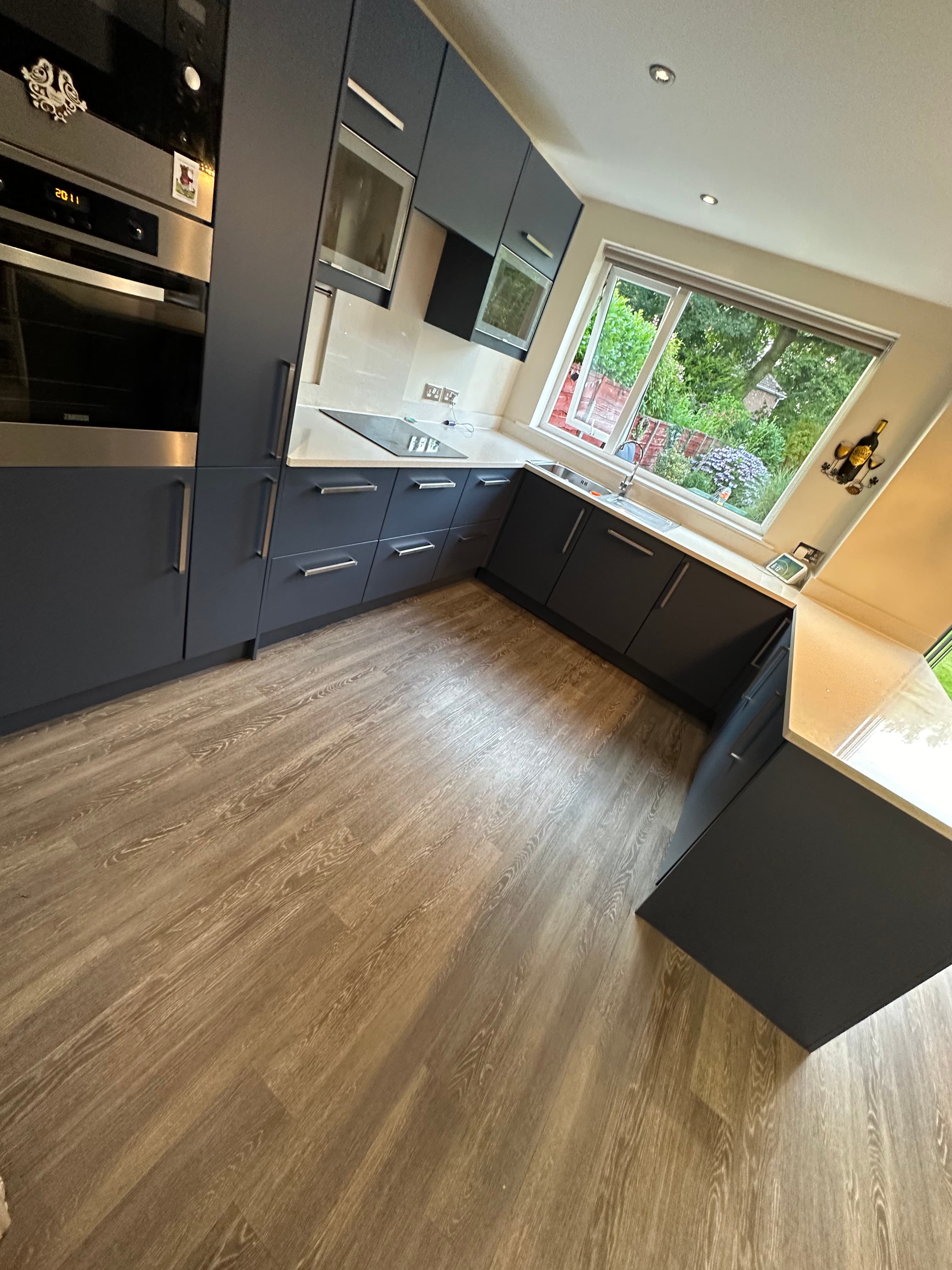
Most homeowners come to us already convinced they need a new kitchen. Then they look at the quote, swallow hard, and start googling alternatives. That's how most people end up considering a respray — not because they read about it first, but because £14,000 to replace something that mostly works fine felt suddenly insane.
The honest comparison nobody seems to publish is this: which option is actually right for your kitchen, in your house, in 2026? It isn't always respraying. Sometimes the answer is replace. Sometimes it's a hybrid — respray plus new worktops, or respray plus new doors. The right answer depends on six things, and here's how to work it out properly.
The headline numbers
The straight comparison most people are trying to make:
| Factor | Kitchen Respray | Mid-range New Kitchen | Premium New Kitchen |
|---|---|---|---|
| Cost | £999–£3,500 | £10,000–£15,000 | £18,000–£30,000+ |
| Time on site | 1–7 days | 3–4 weeks | 4–6 weeks |
| Kitchen unusable for | 0 days | 14–21 days | 21–30 days |
| Skip / waste | None | 1–2 skips | 2–3 skips |
| Designers / fitters / tradespeople involved | 1 spray team | 6–10 different trades | 8–12 different trades |
| Decisions to make | Colour, finish, handles (~5 decisions) | 40+ decisions (handles, hinges, soft-close, worktops, splashbacks, sinks, taps, lighting, flooring, layout, plinths, cornices, end panels, integrated appliances…) | 60+ decisions |
| Risk of cost overrun | Very low | High (most kitchens go over budget) | Very high |
| Visual transformation | High | High | High |
| Functional change | None | High | High |
| Resale impact | Positive | Positive | Marginal |
The visual transformation is genuinely comparable — we have plenty of clients whose dinner-party guests assume the kitchen has been entirely replaced. The functional change is where they diverge: if your layout works, a new kitchen doesn't give you anything a respray doesn't, except a much bigger bill.
The six questions that decide for you
Walk round your kitchen with these six questions. Be honest about each. The answers tell you which way to go.
1. Does the layout work?
If the layout works — meaning you can cook, prep, store and move around it without constant frustration — respraying is almost certainly the right call. If the layout is wrong (no prep space, awkward triangles, dead corners you've never used in 8 years), no amount of paint fixes that. Replace.
2. Are the carcasses (the cabinet boxes) structurally sound?
Open the doors. Pull out the drawers. Look inside. MDF carcasses last 20–30 years comfortably if they haven't been water-damaged. If they're solid, square, and the hinges hold properly, they're fine. If the bottom of the sink cabinet is bubbling from a slow leak, or the corner units are sagging, you may need replacement (or at least new carcasses for the damaged ones).
3. Are the doors physically sound, or just visually tired?
This matters enormously. A vinyl-wrapped door with the laminate peeling at the bottom — sound underneath. A solid MDF or wood door that's been bashed about a bit — sound. A door that's water-damaged, swollen, or splitting at the joints — that one specific door may need replacing even if everything else gets sprayed.
4. Do you need different storage or appliances?
If you've always wanted a wine fridge, a pull-out larder, deeper drawers for pots, a Quooker tap, or integrated appliances you don't currently have — that's a kitchen rebuild or at least a significant remodel. Respraying doesn't add storage. But — and this is the move most people miss — you can respray AND add 1–2 new units, matched to the resprayed colour. Best of both worlds for a fraction of a full replacement.
5. Are the worktops, sink and splashback acceptable?
Worktops are the second-biggest visual element after cabinets. Resprayed cabinets with tired laminate worktops look strange — like you've half-finished the job. If the worktops are fine, respray works beautifully. If the worktops also need replacing, factor that in: laminate worktops are £200–£600 to replace, quartz £1,200–£2,500. A respray plus new worktops is still under £4,000 in most cases.
6. How long do you plan to stay in the house?
If you're moving in 1–2 years: respray every time. A new kitchen rarely returns its full cost in resale value within that window — you'll lose money. If you're staying 10+ years and a respray genuinely won't satisfy you, the maths can support replacement.
If you answered “respray works” to 4+ of those six, you're in respray territory. If you answered “no, that's broken” to 3+, you're probably looking at replacement.
What you can't change with a respray
To be fair to the option you don't get talked into often enough, here's what respraying genuinely cannot do:
- Add cabinets or storage. A respray only refinishes what's already there.
- Move appliances. Hob, oven, sink and fridge stay where they are.
- Change cabinet sizes. A 600mm base unit stays a 600mm base unit.
- Fix structural damage. Water-damaged or rotten carcasses need replacing.
- Change door style. A shaker door stays a shaker. A flat slab door stays a flat slab. (You can technically swap doors only — keeping carcasses and respraying — but that's a different project.)
- Modernise integrated appliances. Your 2008 dishwasher and fridge will look 2008 even with new-looking cabinets around them.
If three or more of those are dealbreakers, you're better off replacing.
Disruption — what the two weeks actually look like
The cost difference between respray and new kitchen is large but easy to grasp. The disruption difference is much harder to imagine until you're living through it.
A Standard kitchen respray (Day 1): Team arrives 8am. Furniture and worktops covered with dust sheets. Doors and drawers labelled and removed. Surfaces sanded (some dust but contained), masked, primed, sprayed, top-coated. Doors refitted. Team gone by 5–6pm. Kitchen useable that evening. Smell of paint dissipated within 24 hours.
A Premium kitchen respray (Day 1 + Refit Day): Day 1 same as above except doors leave with us. You have open carcasses for 5–10 days — you can still cook, store and use everything. We come back, refit doors in half a day. Kitchen permanently finished.
A new kitchen:
| Week | What's happening |
|---|---|
| Week 1 | Old kitchen removed. Skip on driveway. Floor up. Walls patched. Plastering and dust everywhere. Living off microwave meals and takeaways. |
| Week 2 | First fix electrical and plumbing. Walls re-skimmed. Tile prep. No kitchen at all. |
| Week 3 | Cabinets fitted. Some chaos — multiple trades on site daily. Worktops templated (usually 7–10 days from template to install). |
| Week 4 | Worktops installed. Splashbacks. Second-fix electrical. Appliances connected. First proper meal cooked. |
| Week 5+ | Snagging. The handle that came in the wrong finish. The drawer that doesn't quite close. The chip in the worktop. |
In 25+ years, we've never had a customer say their respray was disruptive. We've had multiple new-kitchen-buyers tell us they'd never do it again.
Total cost of ownership over 10 years
This is the comparison nobody runs but probably should. Across a 10-year horizon:
Kitchen respray (Premium, £2,500):
- Initial cost: £2,500
- Maintenance: £0 (touch-up paint included)
- Refresh at year 10: £2,500 (if you want another change)
- Total: £2,500–£5,000 over 10 years
Mid-range new kitchen (£12,000):
- Initial cost: £12,000
- Maintenance: £200–£500 (handle replacements, hinge repairs, soft-close failures over 10 years)
- Visual fade / dating: noticeable by year 7–8
- Total: £12,200–£12,500 over 10 years
Even if you respray twice in a decade, you've spent less than half the cost of replacing once. And you can change the colour entirely at year 5 if trends shift, which a £12,000 new kitchen makes financially difficult.
The hidden costs of a new kitchen
The £10,000 mid-range kitchen quote rarely stays at £10,000. The costs that get added on:
- Removal of old kitchen and disposal: £500–£1,200
- Plumbing changes: £400–£1,500 (especially if sink position moves)
- Electrical changes: £400–£1,200 (new sockets, lighting circuits, oven supply)
- Plastering and patching: £400–£900
- Flooring: £600–£3,000 (often forgotten — old floor never matches new kitchen footprint)
- Tiling / splashbacks: £300–£1,500
- Worktops if not in the headline quote: £600–£2,500
- Appliances if not included: £1,500–£4,000
- Painting and decorating after fit: £300–£800
- Eating out / takeaways for 3–4 weeks: £400–£800
- The “while we're at it” creep: £500–£2,500 (the lighting you didn't plan for, the extra unit, the upgraded handles, the better tap)
A £10,000 quoted kitchen typically lands at £14,000–£18,000 by the end. None of these costs exist on a respray.
When replacing is genuinely the right call
To stop this from sounding like a one-sided sales pitch — there are real situations where replacement is the better answer and we'll tell you that:
- Damaged carcasses. If multiple cabinets are water-damaged or structurally failing, we can replace individual units, but past about 4–5 affected cabinets, replacement starts making financial sense.
- Wrong layout that's affecting your life. If you genuinely can't cook properly because the layout is broken, a respray isn't going to fix that. Spend the money on the layout, then maintain the new finish with care.
- Major appliance upgrades requiring different cabinet sizes. An American-style fridge in a kitchen designed for an undercounter fridge needs cabinet changes.
- House-doubling renovation. If you're doing a £100k extension and the kitchen is being moved or extended into the new space, a respray is the wrong moment — replace as part of the wider project.
- You've genuinely fallen out of love with the door style. Slab doors and shaker doors have very different visual languages. If you despise slab doors, a sprayed slab door is still a slab door.
We turn down respray work fairly regularly when one of the above applies. There's no point in us doing the job if the result won't make the customer happy.
Frequently asked questions
Will a respray look as good as a new kitchen?
Visually, in most cases yes. A properly sprayed kitchen (Premium, with full prep, multiple coats, and a workshop drying environment) is genuinely indistinguishable from a new factory-finished kitchen at the same colour and finish level. What it can't replicate is the smell of “new” — which fades within a fortnight in a new kitchen anyway.
Does respraying add value to my house?
Mostly through avoidance — it prevents a tired kitchen from devaluing the property. A buyer walking into a dated kitchen subconsciously discounts the asking price by the cost of replacing it (often £15,000+). A buyer walking into a clean, modern, well-finished kitchen doesn't make that mental subtraction. The respray itself doesn't add £15,000 to the value — it prevents £15,000 being deducted.
How long after the respray can I use the kitchen normally?
Standard respray: useable that evening with light handling. Full curing of 2K paint takes 7 days — during which we recommend not bashing pots into doors or scrubbing handles aggressively. After 7 days, treat it as you would a new kitchen.
Can you respray a kitchen and add new doors to it?
Yes — and this is often the smartest hybrid. If 2–3 doors are damaged beyond paint repair but the rest are fine, we can install matching replacement doors and respray the entire kitchen as one. End result is uniform and significantly cheaper than full replacement.
What about respraying handles, hinges and trims?
Handles are usually replaced rather than sprayed — handles take heavy daily contact and any sprayed finish will wear at the touch points. We typically remove handles, spray the doors, then refit existing or new handles. Hinges are not sprayed. Plinths and cornices are sprayed as part of the job.
How do you choose a sprayer if you decide to respray?
Five things to check: (1) workshop address, not just a mobile number, (2) photographable real-job evidence with before/afters from this year, (3) at least 50 Google reviews, (4) genuinely uses 2K industrial paint not eggshell wall paint, (5) warranty in writing. If a sprayer ticks all five, you're in safe territory.
Why is your respray cheaper than a new kitchen but more expensive than a paint kit from B&Q?
The B&Q kits are designed for DIY, use water-based paint that cures slowly, fails at handle points within 18 months, and don't include any of the prep that actually makes a finish last. A professional respray uses paint that costs £80–£200 per litre, applied by someone with years of practice, with proper prep that takes 6–10 hours minimum. The cost difference reflects the durability difference.
Can you do part of a kitchen rather than all of it?
Yes, but we usually recommend against it. Partial respraying creates colour-matching issues — even the same paint behaves slightly differently across batches and ages. Full respraying gives a uniform result. The exception is islands and standalone units, which can be done in a contrasting colour as a feature.
Do you do free quotes?
Yes. Take our 30-second quiz at revitalizeresprays.co.uk/quote, upload photos, and we come back within 24 hours with a fixed price. No home visit needed for most jobs — modern phone cameras give us everything we need.
Ready for a free quote?
Take our 30-second quiz at revitalizeresprays.co.uk/quote — upload a few photos of your kitchen and we'll come back to you within 24 hours with a fixed price.
Or call Bryan directly on 07384 574225 — straight through to the workshop, no call centre, no chasing.
Revitalize Resprays — Unit 1a, 88-90 Wilton Street, Denton, Manchester M34 3NH. 25+ years wood-finishing experience, 137 five-star Google reviews, as featured in The Times.
Related reading

Bryan Grime
Founder, Revitalize Resprays
More from the blog
How Much Does a Kitchen Respray Cost in 2026? (Real UK Prices, No Guesswork)
Kitchen respray costs in the UK: £999–£3,500 in 2026. Full breakdown by size, finish, and condition from a Manchester sprayer with 25+ years on the tools.
Kitchen ResprayingHow Long Does a Sprayed Kitchen Finish Actually Last? (Real Data, 2026)
Sprayed kitchen finishes last 5–7 years (Standard) or 10+ years (Premium). Real data from 25+ years of resprayed kitchens, what makes them fail, and how to maximise lifespan.
Kitchen ResprayingVinyl-Wrapped Kitchens: Why They Peel and What Actually Fixes It (2026)
Vinyl-wrapped kitchen doors peel after 3–5 years. Here's why it happens, why most quick fixes make it worse, and the only proper solution — from a Manchester sprayer.